

What Is a Memorandum to Cabinet?
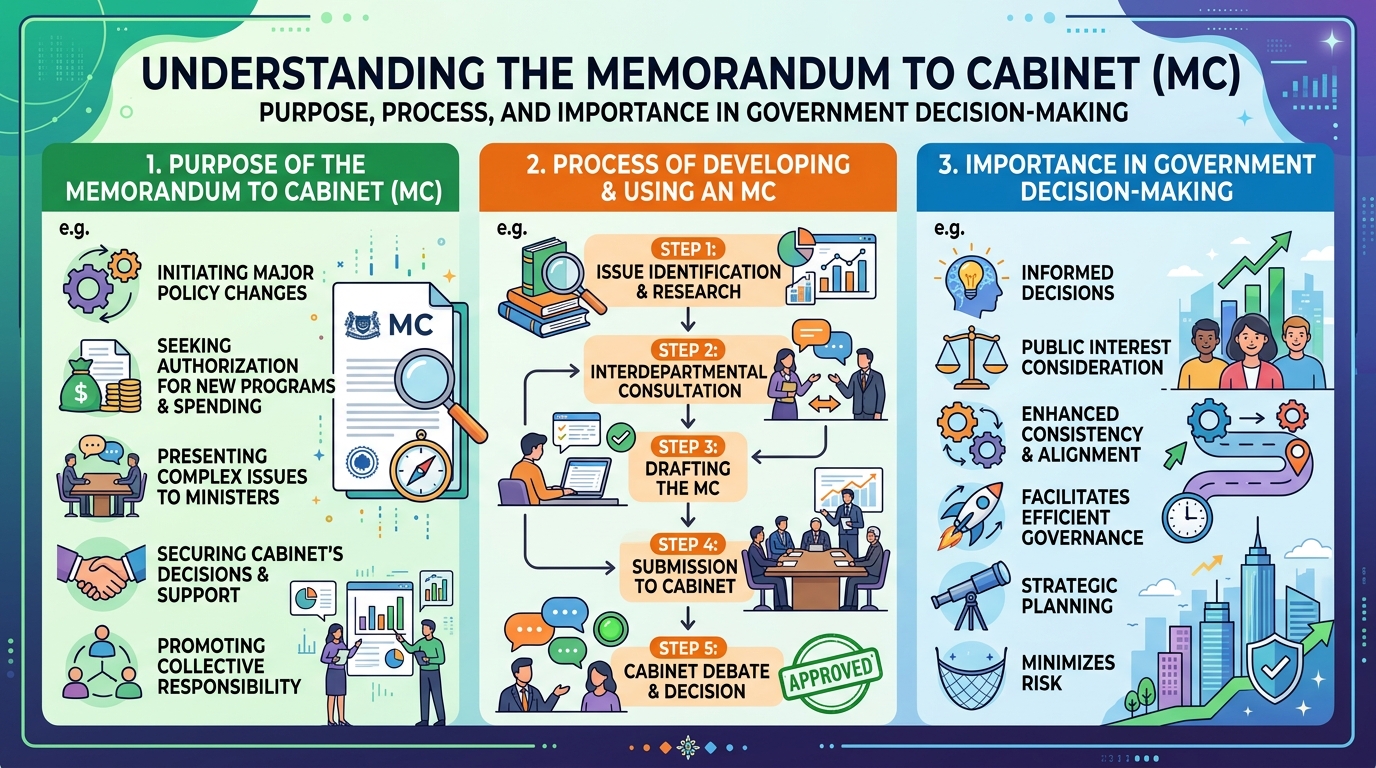
A memorandum to cabinet is a formal document prepared by a government department or ministry to seek approval or direction from the cabinet on a specific policy, program, or legislative proposal. It explains the issue being addressed, presents evidence, analyzes possible options, and recommends a preferred course of action. The document serves as a communication tool between officials and senior political leaders, ensuring that cabinet members receive consistent and comprehensive information before making decisions. Its structured format promotes transparency within government processes while supporting coordinated policy development across multiple departments and agencies.
Why Governments Use a Memorandum to Cabinet
Governments rely on a memorandum to cabinet because major decisions often affect multiple sectors, budgets, and public interests. Rather than making choices based on isolated opinions, cabinet members need organized information that considers economic, social, legal, and administrative impacts. The memorandum provides this foundation by bringing together research, expert analysis, and strategic recommendations into a single document. It allows ministers to compare alternatives and understand potential consequences before approving a proposal. This systematic approach reduces uncertainty and helps governments develop policies that align with national priorities and long-term objectives.
Key Components of a Memorandum to Cabinet
Every memorandum to cabinet follows a structured format designed to communicate complex information efficiently. It usually begins with an overview of the issue and explains why government action is necessary. The document then outlines policy objectives, examines available options, discusses financial implications, identifies risks, and recommends a preferred solution. Supporting evidence and consultations with relevant stakeholders are often summarized to strengthen the proposal. By organizing information into logical sections, the memorandum allows cabinet members to review significant details quickly while maintaining a comprehensive understanding of the policy under consideration.
The Preparation Process Behind the Document
Preparing a memorandum to cabinet involves collaboration among policy analysts, legal experts, financial specialists, and senior officials. Government departments conduct research, gather statistical evidence, consult stakeholders, and evaluate potential outcomes before drafting the document. Multiple rounds of internal review ensure that recommendations are accurate, practical, and consistent with existing government priorities. Legal and financial assessments are carefully examined to minimize future challenges. Once finalized, the memorandum undergoes approval within the responsible ministry before being submitted for cabinet consideration, demonstrating the extensive planning that supports high-level government decisions.
The Role of Cabinet in Evaluating the Memorandum
After receiving a memorandum to cabinet, ministers examine the proposal from various perspectives, including public interest, fiscal responsibility, and political feasibility. Cabinet discussions allow members to question assumptions, request clarification, and debate alternative approaches before reaching a collective decision. The memorandum serves as the foundation for these conversations by presenting balanced information and supporting evidence. In many cases, cabinet may approve the recommendation, request revisions, or delay action until additional analysis is completed. This evaluation process strengthens accountability and encourages thoughtful policy development within government institutions.
Benefits of a Well-Written Memorandum to Cabinet
A carefully prepared memorandum to cabinet offers significant advantages for both policymakers and public administration. Clear analysis helps decision-makers understand complicated issues without unnecessary confusion, while well-supported recommendations increase confidence in the proposed solution. The document also encourages cooperation between departments by identifying shared responsibilities and potential challenges before implementation begins. Effective memoranda improve policy consistency, reduce duplication of effort, and support better allocation of public resources. As a result, governments can make informed decisions that are more likely to achieve intended outcomes and maintain public trust over time.
Common Challenges in Drafting the Document
Creating a successful memorandum to cabinet is not without difficulties because policy issues often involve uncertainty and competing priorities. Writers must present objective analysis while addressing political, financial, legal, and social considerations in a balanced manner. Gathering reliable data, coordinating with multiple departments, and meeting strict timelines can also complicate the drafting process. In addition, the document must remain concise enough for busy decision-makers while still providing sufficient detail for informed discussion. Achieving this balance requires strong research skills, careful planning, and effective communication throughout the development process.
The Importance of Confidentiality and Accuracy
Confidentiality is a defining characteristic of a memorandum to cabinet because it often contains sensitive policy proposals and internal government deliberations. Premature disclosure could influence markets, affect negotiations, or create unnecessary public confusion before decisions are finalized. At the same time, accuracy is equally important because cabinet members rely on the document when making choices with national consequences. Every statistic, legal interpretation, and financial estimate must therefore be carefully verified. Maintaining both confidentiality and accuracy protects the integrity of the decision-making process and strengthens confidence in government administration.
How Memorandum to Cabinet Documents Shape Public Policy
Although citizens rarely read a memorandum to cabinet, its influence extends far beyond government offices because many public policies begin with this document. Infrastructure projects, environmental strategies, healthcare reforms, education initiatives, and economic programs often pass through the cabinet memorandum process before implementation. By organizing evidence, evaluating alternatives, and presenting practical recommendations, the document transforms ideas into actionable government policy. Its role demonstrates that effective governance depends not only on leadership but also on careful analysis, collaboration, and structured planning that guide responsible decision-making for the benefit of society.
Conclusion
A memorandum to cabinet is far more than a routine administrative document because it serves as a critical bridge between policy development and government action. Through detailed analysis, structured recommendations, and careful evaluation, it supports informed decisions that influence national priorities and public services. Its preparation requires expertise, collaboration, and attention to accuracy while maintaining appropriate confidentiality throughout the process. Understanding the purpose and importance of a memorandum to cabinet provides valuable insight into how governments develop responsible policies and make complex decisions that shape the future of their countries and communities.