

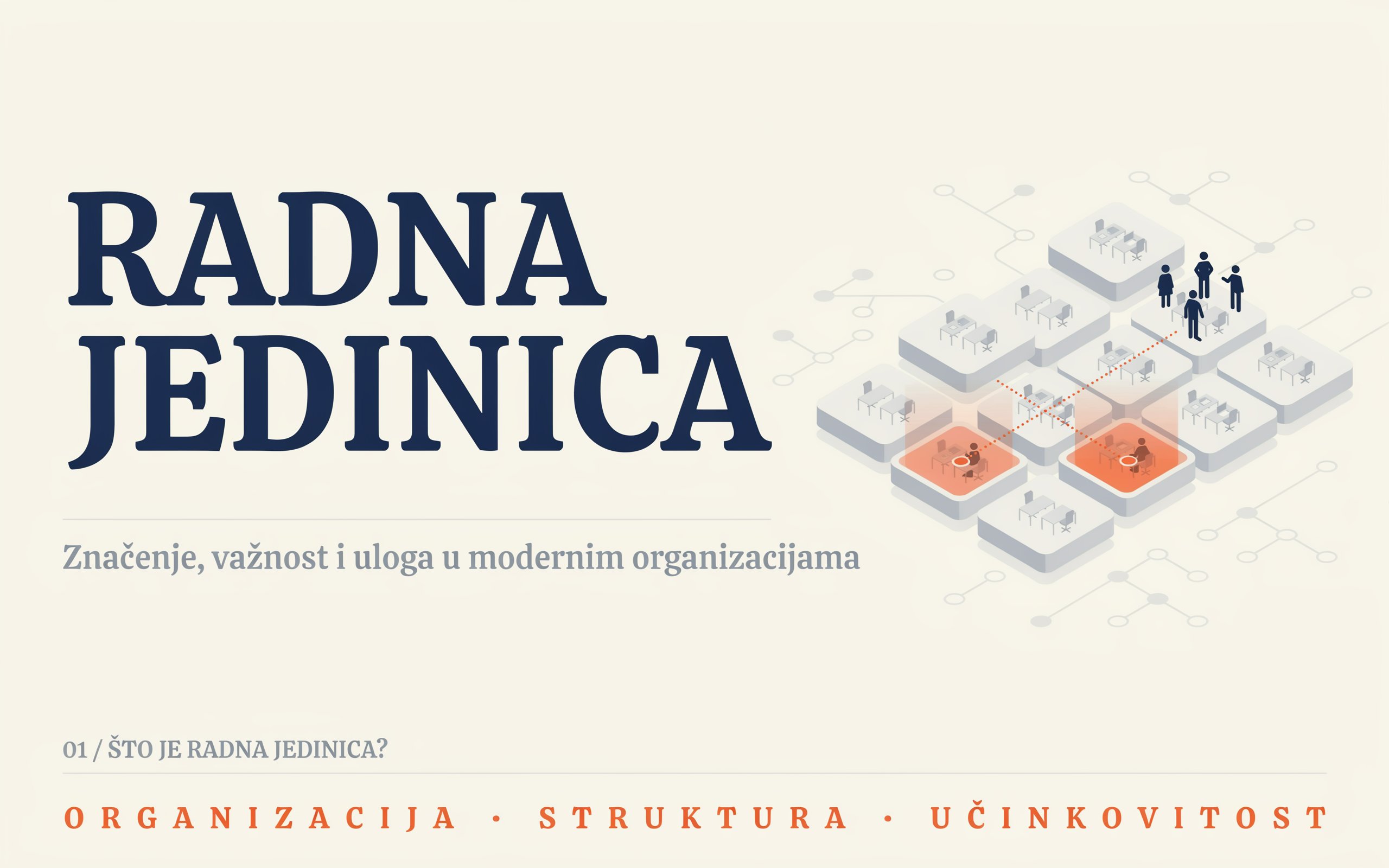
What Does Radna Jedinica Mean?
The phrase radna generally refers to a work unit, department, or functional section within an organization that performs designated responsibilities. It serves as a building block of the overall organizational structure by assigning employees to specific duties and objectives. Each radna operates within established guidelines while cooperating with other units to accomplish shared goals. The concept emphasizes specialization and accountability, allowing organizations to distribute work effectively. By defining responsibilities clearly jedinica helps prevent confusion, supports efficient communication, and creates an organized environment where employees understand their roles and expectations.
The Importance of Radna Jedinica in Organizational Structure
Every successful organization depends on a clear structure, and a radna jedinica plays a vital role in achieving that objective. It separates complex operations into manageable sections, enabling leaders to oversee activities more efficiently. Instead of one department handling every responsibility, different work units focus on specialized tasks that require unique skills and expertise. This arrangement improves coordination while reducing operational delays and misunderstandings. Employees benefit from defined responsibilities, and managers can monitor performance more effectively. As organizations grow, the existence of organized work units becomes increasingly important for maintaining consistency and achieving strategic goals.
How Radna Jedinica Supports Productivity
A properly organized radna jedinica contributes significantly to workplace productivity by ensuring that tasks are assigned according to expertise and available resources. Employees working within specialized units develop experience in their respective areas, allowing them to complete assignments with greater speed and accuracy. Clear communication channels reduce unnecessary duplication of work and help solve problems more efficiently. Managers can identify performance trends and allocate resources where they are needed most. Through organized planning and coordinated teamwork, the work unit creates an environment that encourages continuous improvement while supporting overall organizational success and operational excellence.
The Relationship Between Employees and Radna Jedinica
Employees form the foundation of every radna jedinica because their skills, cooperation, and commitment determine its effectiveness. A clearly defined work unit provides individuals with specific responsibilities, performance expectations, and opportunities for collaboration. This clarity reduces uncertainty and allows employees to focus on achieving measurable objectives. Working within a structured unit also promotes teamwork, knowledge sharing, and professional development as colleagues contribute different perspectives toward common goals. When management supports communication and recognizes achievements, the relationship between employees and the radna jedinica becomes stronger, creating a positive and productive organizational culture.
Radna Jedinica in Public and Private Sectors
The concept of radna jedinica applies equally to both public institutions and private businesses, although their objectives may differ. Government organizations often establish work units to manage administrative services, public programs, and regulatory responsibilities efficiently. Private companies use similar structures to oversee production, sales, finance, marketing, and customer service operations. In both sectors, dividing responsibilities into organized units helps improve accountability and resource management. Despite differences in mission and management style, the underlying purpose remains consistent: creating an organized framework that supports effective decision-making and the successful completion of organizational tasks.
Technology and the Evolution of Radna Jedinica
Technological advancement has significantly influenced the way a radna jedinica operates in modern organizations. Digital communication platforms, project management software, and data analysis tools allow work units to collaborate more effectively across different locations and time zones. Automation reduces repetitive tasks, enabling employees to focus on strategic activities that require creativity and critical thinking. Managers gain access to real-time performance information, making planning and decision-making more accurate. As remote and hybrid work models become increasingly common, technology continues to reshape the traditional concept of the work unit while preserving its essential organizational purpose.
Challenges Faced by a Radna Jedinica
Although a radna jedinica offers many organizational advantages, it can also face challenges that affect performance and efficiency. Communication barriers between departments may create misunderstandings or delays in completing projects. Uneven distribution of workload can lead to employee stress and reduced motivation, while limited resources may restrict productivity and innovation. Organizational changes, technological transitions, and shifting market demands also require work units to adapt continuously. Effective leadership, ongoing training, and collaborative planning are essential for overcoming these challenges and ensuring that each work unit remains aligned with broader organizational objectives and expectations.
Best Practices for Managing a Radna Jedinica
Successful management of a radna jedinica depends on clear objectives, effective communication, and continuous performance evaluation. Leaders should establish measurable goals that align with the organization’s overall strategy while providing employees with the resources needed to achieve them. Regular feedback encourages improvement and strengthens accountability across the team. Professional development opportunities help employees expand their skills and adapt to changing workplace requirements. Open collaboration between different work units also promotes innovation and problem-solving. By combining strategic planning with supportive leadership, organizations can maximize the efficiency and long-term value of every operational unit.
The Future of Radna Jedinica in Modern Workplaces
As organizations embrace digital transformation and changing workforce expectations, the concept of radna jedinica will continue evolving while maintaining its core purpose. Future work units are likely to become more flexible, collaborative, and technology-driven, allowing employees to contribute across multiple projects rather than remaining within rigid structures. Artificial intelligence, automation, and data analytics will support better planning and faster decision-making without replacing the importance of human expertise. The ability to adapt to innovation while preserving accountability and teamwork will ensure that the radna jedinica remains a fundamental element of effective organizational management for years to come.
Conclusion
A radna jedinica represents far more than a simple organizational division because it serves as a practical framework for managing responsibilities, improving productivity, and supporting strategic goals. Through specialization, collaboration, and effective leadership, work units enable organizations to operate efficiently across diverse industries and sectors. Technological advancements continue to reshape their functions, but the importance of clear structure and coordinated teamwork remains unchanged. Understanding the role of a radna jedinica provides valuable insight into modern organizational success and highlights why well-managed work units are essential for sustainable growth and long-term performance.