

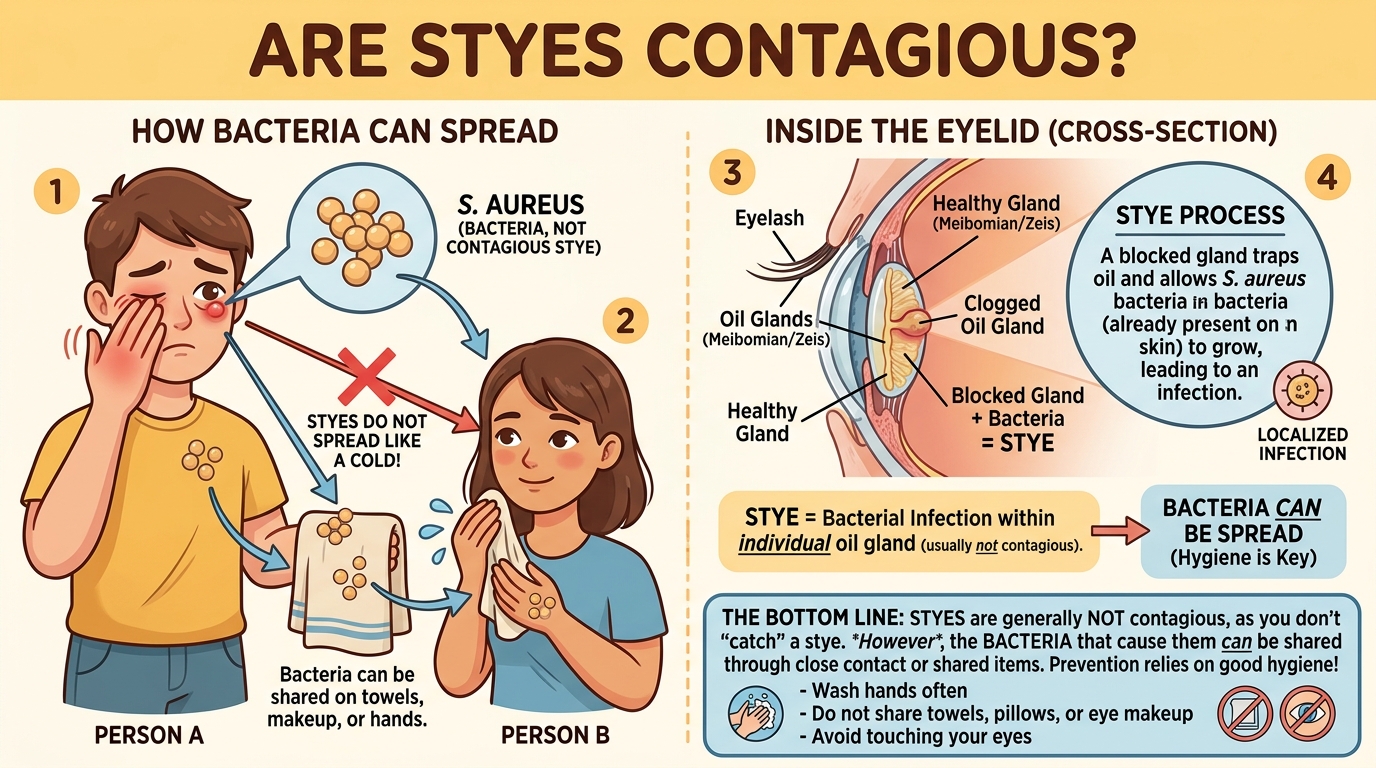
Many people notice a painful bump on their eyelid and immediately wonder, are styes contagiou? This common question arises because styes often appear suddenly and can resemble other eye conditions. A stye is a small, tender lump that usually develops when an oil gland or hair follicle near the eyelid becomes infected, most commonly by bacteria. Although styes can be uncomfortable and sometimes alarming, understanding how they develop, whether they spread from person to person, and how they should be treated can help reduce unnecessary concern and support proper eye care.
What Is a Stye?
A stye is a small, red, painful swelling that forms along the edge of the eyelid or beneath it. It develops when one of the tiny oil-producing glands becomes blocked and infected. The affected area may become swollen, tender, and occasionally filled with pus. In some cases, the eye may water more than usual or feel irritated, as though something is trapped inside it. Most styes heal on their own within several days or weeks with proper care. They are common in both adults and children and usually do not cause permanent vision problems.
Are Styes Contagiou?
The question are styes contagiou is understandable because they are often caused by bacteria. However, a stye itself is generally not considered contagious in the same way as viral eye infections. You cannot usually catch a stye simply by being near someone who has one. Nevertheless, the bacteria associated with the infection can spread through direct contact with contaminated hands, towels, pillowcases, or cosmetics. Maintaining good personal hygiene significantly reduces this risk and helps prevent bacteria from reaching the eyelids where another stye could potentially develop.
Common Causes of Styes
Most styes develop because bacteria enter an oil gland or eyelash follicle, leading to infection and inflammation. Touching the eyes with unwashed hands, using old eye makeup, or failing to remove cosmetics before sleeping can increase the likelihood of developing a stye. Individuals with chronic eyelid inflammation or certain skin conditions may also experience recurring episodes. Poor contact lens hygiene can contribute as well. Understanding these risk factors allows people to adopt healthier habits that reduce bacterial exposure and promote better overall eye health throughout daily life.
Recognizing the Symptoms
Recognizing the symptoms of a stye helps distinguish it from other eye conditions that may require different treatment. The most common sign is a small, painful lump on the eyelid that becomes red and swollen. Some individuals experience tenderness, increased tearing, mild sensitivity to light, or the feeling that something is irritating the eye. As the infection progresses, the lump may develop a visible yellow or white center. Although these symptoms can be uncomfortable, they usually remain localized and gradually improve with appropriate home care and proper eyelid hygiene.
How to Treat a Stye Safely
Most styes respond well to simple home treatment without requiring extensive medical intervention. Applying a warm, clean compress to the affected eyelid several times each day encourages natural drainage while reducing discomfort. It is important not to squeeze or attempt to pop the stye because doing so may worsen the infection or spread bacteria. Avoid wearing eye makeup or contact lenses until the area has healed completely. If symptoms become severe, vision changes occur, or the swelling persists, consulting a healthcare professional is recommended for further evaluation.
Preventing Future Styes
Preventing future styes largely depends on maintaining good eye hygiene and reducing bacterial exposure. Washing hands regularly before touching the face or eyes helps minimize the transfer of harmful bacteria. Replacing old eye makeup, cleaning makeup brushes, and removing cosmetics before bedtime are also important preventive measures. Contact lens users should carefully follow cleaning instructions and avoid handling lenses with dirty hands. Individuals prone to recurring styes may benefit from gently cleaning their eyelids each day to remove excess oil and debris that could contribute to gland blockage.
When to Seek Medical Attention
Although most styes improve without complications, certain situations require professional medical evaluation. A healthcare provider should examine the eye if the swelling becomes unusually large, severe pain develops, vision becomes blurred, or the infection spreads beyond the eyelid. Medical attention is also advisable when a stye fails to improve after several days of home treatment or continues recurring frequently. In some cases, prescription medications or minor procedures may be necessary to resolve persistent infections. Early medical assessment helps prevent complications and supports faster recovery when symptoms become more serious.
Maintaining Long-Term Eye Health
Healthy daily habits contribute significantly to reducing the risk of styes and other eye conditions. Regular handwashing, avoiding unnecessary eye rubbing, maintaining clean personal items, and following proper contact lens hygiene all support long-term eye wellness. Eating a balanced diet, staying hydrated, and getting adequate rest may also benefit overall health, including the eyes. Routine eye examinations allow professionals to identify underlying conditions that could contribute to repeated eyelid infections. Consistent preventive care remains one of the most effective strategies for protecting vision and maintaining healthy, comfortable eyes.
Conclusion
The question are styes contagiou is common, but the answer is reassuring. A stye itself is generally not contagious, although the bacteria that contribute to its development can spread through poor hygiene practices. Understanding the causes, symptoms, treatment options, and preventive measures helps reduce the likelihood of future infections while supporting healthy eyes. Most styes heal successfully with simple home care, including warm compresses and good eyelid hygiene. By practicing proper cleanliness and seeking medical advice when necessary, individuals can manage styes effectively and maintain long-term eye health with confidence.