

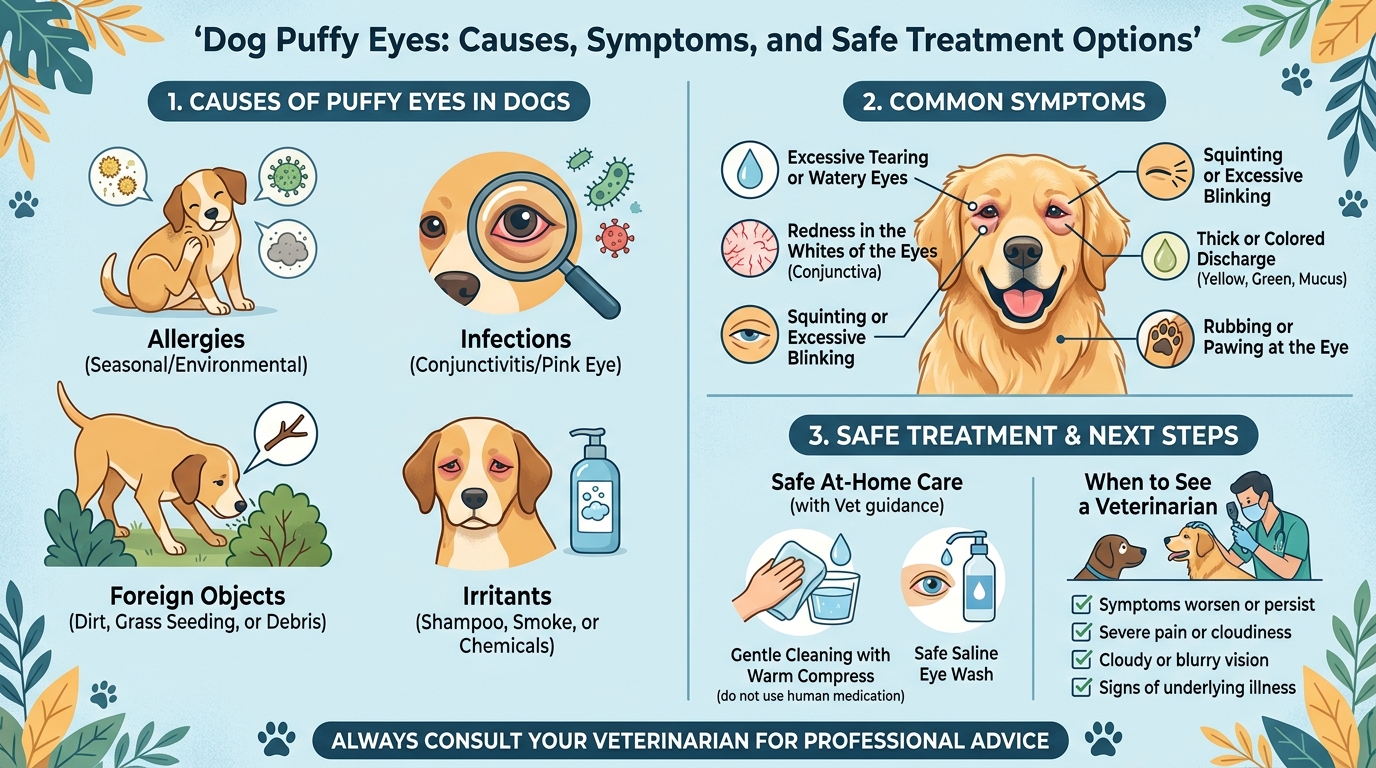
Dog puffy eyes are a common concern for pet owners and can appear suddenly or develop gradually depending on the underlying cause. Swelling around a dog’s eyes may indicate anything from mild irritation to more serious health issues that require veterinary attention. Because the eyes are sensitive and closely connected to overall health, changes in their appearance should never be ignored. Understanding why puffiness occurs helps owners respond quickly and appropriately. In many cases, early care can prevent complications and discomfort for the animal. This guide explains the causes, symptoms, and safe ways to manage eye swelling in dogs effectively.
What Dog Puffy Eyes Mean
Dog puffy eyes refer to swelling or inflammation around the eye area, including the eyelids and surrounding tissues. This condition can affect one or both eyes and may vary in severity from mild swelling to noticeable bulging. It is not a disease itself but rather a symptom of an underlying issue such as allergies, infections, injuries, or irritants. The swelling occurs when fluid accumulates in the tissues due to irritation or immune response. Recognizing this sign early is important because it helps identify whether the condition is minor or requires immediate veterinary care for proper diagnosis and treatment.
Common Causes of Eye Puffiness in Dogs
There are several possible causes behind dog puffy eyes, ranging from environmental factors to medical conditions. Allergies from pollen, dust, or certain foods are among the most frequent triggers, often leading to itching and swelling. Infections caused by bacteria or viruses can also result in inflamed, watery eyes. Physical injuries, such as scratches or foreign objects, may cause localized swelling and discomfort. In some cases, insect bites or contact with irritants like smoke or chemicals can contribute to puffiness. Identifying the cause is essential because each condition requires a different treatment approach to ensure proper recovery and comfort.
Allergies and Environmental Irritants
Allergic reactions are a major reason for dog puffy eyes, especially during seasonal changes when pollen levels are high. Dogs may also react to household dust, mold, cleaning products, or grooming chemicals. These allergens trigger an immune response that leads to inflammation and swelling around the eyes. Symptoms often include redness, excessive tearing, and frequent pawing at the face. Reducing exposure to known irritants can significantly improve the condition. Keeping the dog’s environment clean and using pet-safe products helps minimize allergic reactions. In persistent cases, a veterinarian may recommend antihistamines or other medications to control symptoms effectively.
Eye Infections and Their Symptoms
Infections are another common cause of dog puffy eyes and can be bacterial, viral, or fungal in nature. These infections often lead to redness, discharge, and noticeable swelling around the affected eye. Dogs may also show signs of discomfort such as squinting, rubbing their eyes, or sensitivity to light. Conjunctivitis is one of the most frequently diagnosed eye infections in dogs and requires timely treatment to prevent worsening symptoms. Veterinary care is essential for identifying the specific type of infection and prescribing appropriate medication. Early treatment helps reduce inflammation and prevents the infection from spreading to other parts of the eye.
Injuries and Physical Trauma
Physical injuries can quickly lead to dog puffy eyes, especially if the eye area has been scratched, bumped, or exposed to foreign objects. Dogs are naturally active and may injure themselves while playing, running, or exploring outdoor environments. Even minor trauma can cause swelling as the body responds to protect and heal the affected area. Symptoms may include redness, visible scratches, or uneven swelling around one eye. It is important to avoid touching or attempting to treat the injury at home without guidance. Veterinary evaluation ensures that no deeper damage has occurred and that proper healing can take place safely.
When Dog Puffy Eyes Require Veterinary Attention
While some cases of dog puffy eyes may be mild and temporary, others require immediate professional care. Warning signs include severe swelling, persistent discharge, bleeding, or signs of pain such as whining or avoiding light. If the condition worsens or does not improve within a short period, it may indicate a more serious underlying problem. Eye conditions can progress quickly in dogs, potentially leading to vision issues if untreated. A veterinarian can perform a thorough examination to determine the cause and recommend appropriate treatment. Early intervention is always the safest approach when dealing with eye-related symptoms.
Diagnosis and Veterinary Examination
Diagnosing dog puffy eyes involves a detailed veterinary examination to identify the root cause of the swelling. The veterinarian may inspect the eye using specialized tools, check for foreign objects, and evaluate tear production. In some cases, additional tests such as staining or swabs may be used to detect infections or injuries. The goal is to distinguish between allergies, infections, trauma, or other medical conditions. Accurate diagnosis is essential because treatment varies depending on the underlying issue. Proper examination ensures that the dog receives targeted care, reducing discomfort and preventing potential complications related to untreated eye conditions.
Treatment Options for Eye Swelling
Treatment for dog puffy eyes depends on the diagnosed cause and may include medications, eye drops, or topical ointments. Allergies are often managed with antihistamines or anti-inflammatory drugs, while infections require antibiotics or antiviral treatments. Injuries may need protective care and healing time, along with prescribed medications to reduce swelling. In all cases, keeping the eye area clean and avoiding further irritation is important for recovery. Owners should follow veterinary instructions carefully to ensure effective healing. Consistent treatment helps reduce symptoms quickly and restores normal eye appearance and comfort for the dog.
Preventing Eye Problems in Dogs
Preventing dog puffy eyes involves maintaining good hygiene, reducing exposure to irritants, and ensuring regular health checkups. Keeping the dog’s living environment clean helps minimize allergens such as dust and mold. Grooming around the eyes should be done carefully to avoid irritation or injury. Regular veterinary visits can help detect early signs of eye problems before they become serious. Providing a balanced diet also supports overall immune health, reducing the likelihood of infections. By taking preventive measures, pet owners can significantly lower the risk of eye-related issues and ensure their dogs remain healthy and comfortable.
Conclusion
Dog puffy eyes should always be taken seriously because they often indicate an underlying health issue that requires attention. Whether caused by allergies, infections, injuries, or irritants, timely recognition and proper treatment are essential for recovery. Understanding the symptoms and seeking veterinary care when needed helps prevent complications and ensures the well-being of the dog. With appropriate diagnosis, treatment, and preventive care, most eye conditions can be managed effectively. Pet owners who stay attentive to changes in their dog’s eyes can provide faster relief and support long-term eye health and overall comfort.