

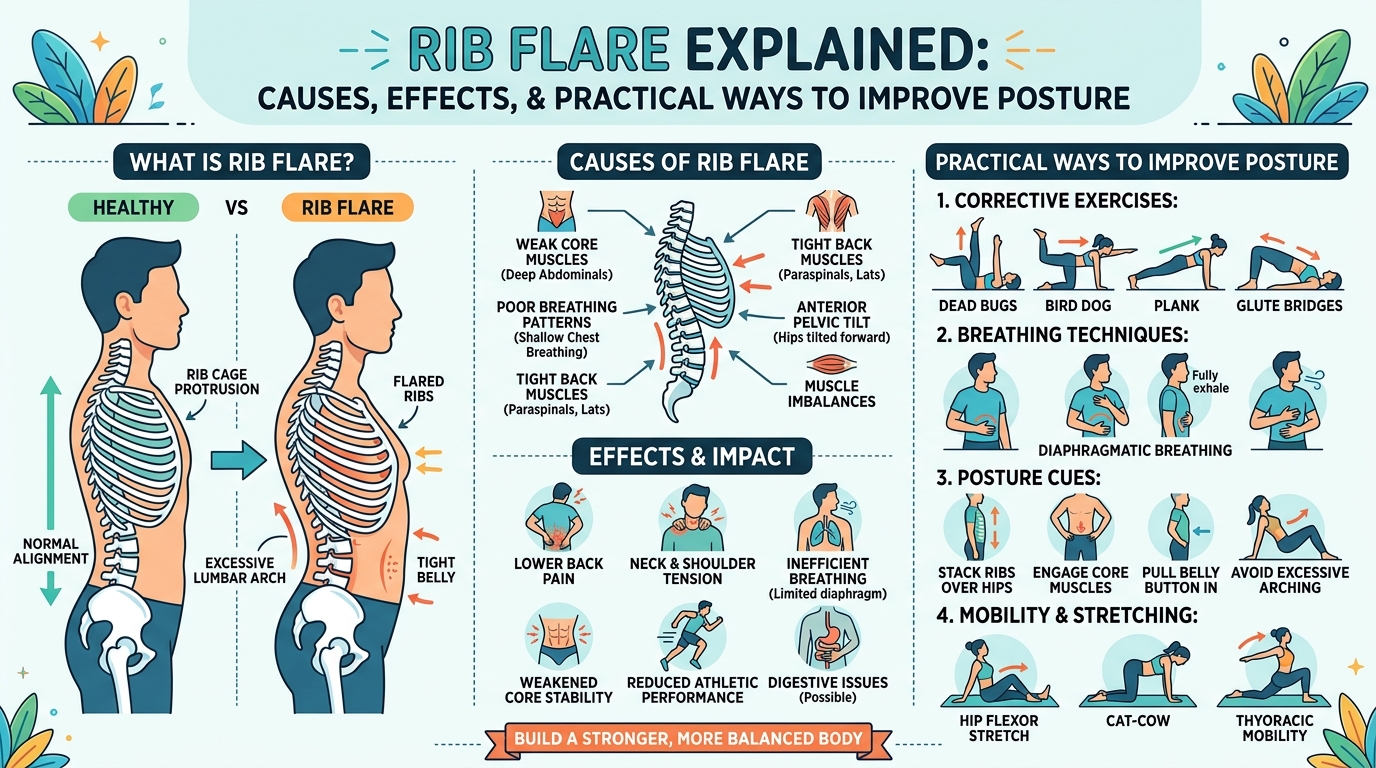
Rib flare is a common postural condition that often goes unnoticed until it begins to affect appearance, movement, or overall body alignment. It occurs when the lower ribs protrude outward more than usual, creating a visible separation between the rib cage and the rest of the torso. While rib flare is not always a medical concern, it can influence posture, breathing patterns, and physical performance. Understanding why rib flare develops and how it relates to body mechanics can help individuals make informed decisions about posture improvement, exercise routines, and long-term musculoskeletal health. Awareness is the first step toward positive physical changes.
Understanding What Rib Flare Means
Rib flare refers to the outward positioning of the lower ribs, causing them to become more prominent than normal when standing or moving. This condition is often associated with posture, muscle imbalances, and breathing mechanics rather than structural abnormalities. In many cases, the lower rib cage appears lifted or expanded even when a person is at rest. Rib flare may occur on one side or both sides of the body and can vary in severity. Understanding the basic characteristics of rib flare helps individuals recognize the condition and identify factors that may contribute to changes in posture and body alignment.
Common Causes of Rib Flare
Several factors can contribute to the development of rib flare. Poor posture is among the most common causes, particularly when the lower back becomes excessively arched over time. Weak abdominal muscles may also reduce the body’s ability to maintain proper rib cage positioning. Certain movement habits, repetitive activities, and improper exercise techniques can further encourage the ribs to shift outward. In some cases, natural anatomy and skeletal structure influence rib cage appearance. Understanding these contributing factors allows individuals to address the root causes of rib flare rather than focusing solely on visible symptoms or cosmetic concerns.
The Connection Between Posture and Rib Flare
Posture plays a significant role in the appearance and progression of rib flare. When the pelvis tilts forward and the lower back arches excessively, the rib cage often compensates by moving upward and outward. This creates an imbalance between the upper and lower portions of the body. Over time, poor postural habits may reinforce this position, making it more noticeable during daily activities. Maintaining proper alignment helps distribute forces evenly throughout the body and supports efficient movement patterns. Improving posture is often one of the most effective strategies for reducing the visual effects associated with rib flare.
How Breathing Patterns Influence Rib Position
Breathing mechanics have a direct relationship with rib cage movement and stability. Individuals with rib flare frequently rely on shallow chest breathing rather than balanced diaphragmatic breathing. This pattern can cause the ribs to remain elevated and expanded instead of returning to a neutral position. Over time, inefficient breathing habits may contribute to muscle tension and altered posture. Learning to engage the diaphragm effectively encourages better rib cage control and improved trunk stability. Proper breathing techniques can support overall body function while helping reduce excessive rib prominence associated with rib flare and related postural concerns.
Impact on Physical Performance and Movement
Rib flare can influence athletic performance and everyday movement by affecting body mechanics and stability. When the rib cage and pelvis are not properly aligned, the core muscles may struggle to function efficiently. This can reduce balance, coordination, and force transfer during physical activities. Athletes and fitness enthusiasts may notice limitations in strength, mobility, or exercise technique. Additionally, compensatory movement patterns can increase stress on certain muscles and joints. Addressing rib flare through corrective exercises and improved posture may help optimize movement efficiency, support performance goals, and reduce the likelihood of unnecessary strain during activity.
The Role of Core Strength in Correction
Core strength is an essential component in managing rib flare and improving overall body alignment. The abdominal muscles, along with deeper stabilizing muscles, help maintain the relationship between the rib cage and pelvis. When these muscles function effectively, they provide support that promotes better posture and movement control. Weakness in the core region can make it difficult to keep the ribs in a neutral position. Developing balanced strength through targeted exercises can enhance stability and support long-term improvements. A strong and coordinated core contributes significantly to reducing postural imbalances associated with rib flare.
Exercise Strategies for Better Alignment
Exercise can play a valuable role in addressing rib flare when performed with proper technique and consistency. Programs that focus on posture, breathing, and core engagement are often beneficial. Controlled movements encourage awareness of body positioning while strengthening muscles responsible for stability. Flexibility exercises may also help release tension in areas that contribute to postural imbalance. The goal is not simply to force the ribs inward but to improve overall movement patterns and alignment. A balanced exercise approach supports healthier mechanics, allowing the body to function more efficiently while gradually reducing the appearance of rib flare.
Daily Habits That Support Improvement
Small daily habits can significantly influence posture and contribute to long-term progress in managing rib flare. Sitting, standing, and walking with greater body awareness can help reinforce healthier alignment throughout the day. Consistent attention to breathing patterns may also improve rib cage positioning over time. Avoiding prolonged periods in poor posture helps prevent unnecessary strain on muscles and joints. Incorporating regular movement breaks and maintaining an active lifestyle can further support musculoskeletal health. Positive daily habits often complement exercise programs and create an environment where postural improvements become more sustainable and easier to maintain.
Long-Term Benefits of Addressing Rib Flare
Addressing rib flare offers benefits that extend beyond physical appearance. Improved posture can enhance comfort, breathing efficiency, and overall movement quality. Better alignment often supports stronger core function and reduces compensatory patterns that may contribute to discomfort or performance limitations. Individuals who focus on correcting rib flare frequently report increased body awareness and improved confidence in movement. While results may take time, consistent effort can produce meaningful changes in both posture and function. Long-term improvements contribute to better physical well-being and help create a foundation for healthier movement habits throughout daily life and exercise activities.
Conclusion
Rib flare is a common postural issue that can affect alignment, breathing, movement, and overall body mechanics. Although it is often influenced by posture, muscle imbalances, and breathing habits, it can usually be addressed through a combination of awareness, exercise, and lifestyle adjustments. Understanding the factors that contribute to rib flare allows individuals to take practical steps toward improvement. By focusing on core strength, proper breathing, and healthy movement patterns, many people can achieve better posture and enhanced physical function. Consistent effort and informed strategies remain key to achieving lasting results.