

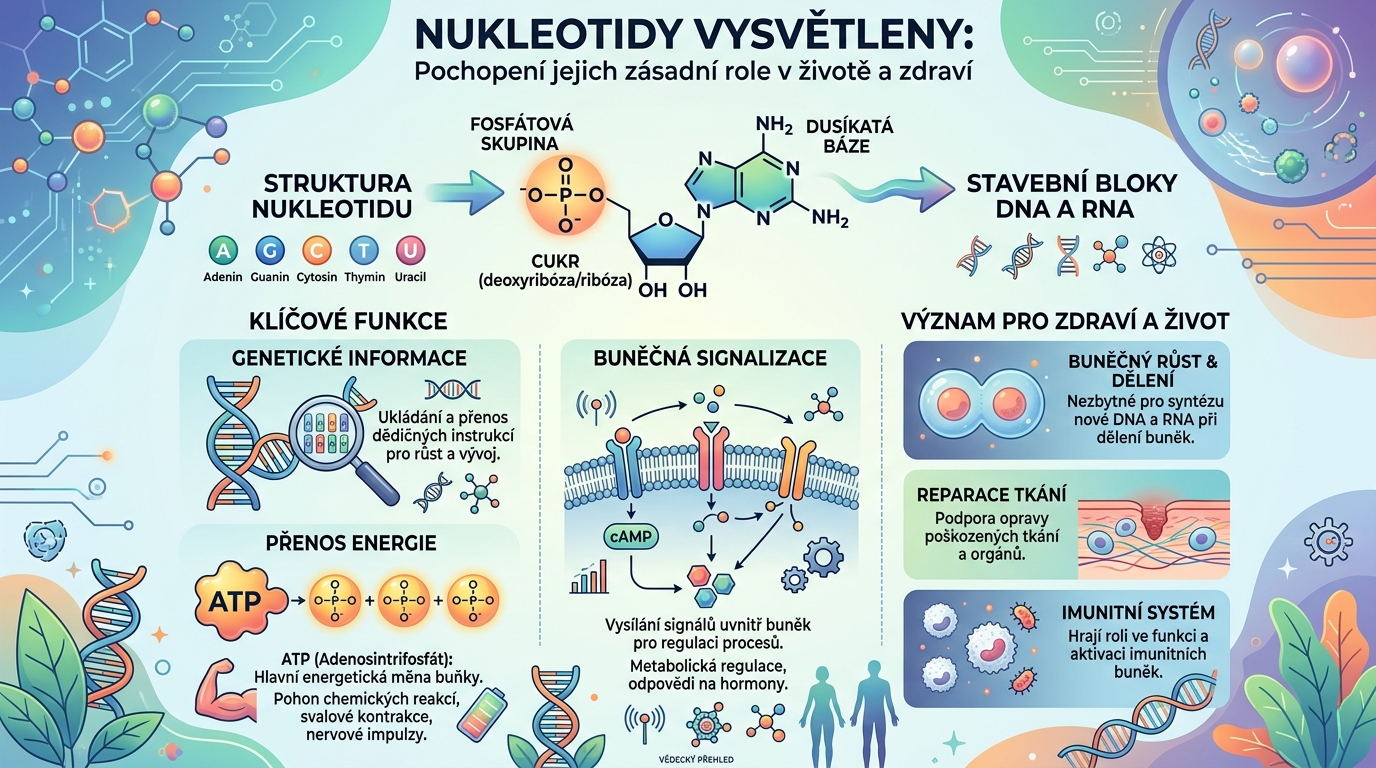
Nukleotidy are among the most important biological molecules because they serve as the building blocks of genetic material and participate in numerous cellular processes. Every living organism depends on these microscopic compounds to store genetic information, support energy production, and regulate essential biochemical reactions. Although the term may sound scientific, understanding nukleotidy is valuable for anyone interested in biology, nutrition, medicine, or overall health. Learning how these molecules function helps explain many natural processes within the human body while highlighting their significance in growth, repair, and the maintenance of healthy cells throughout life.
What Are Nukleotidy?
Nukleotidy are organic molecules that form the structural units of nucleic acids, including DNA and RNA. Each nucleotide consists of three essential components: a sugar molecule, a phosphate group, and a nitrogen-containing base. Together, these components create the framework that stores and transfers genetic information within living cells. Beyond their role in genetics, nukleotidy participate in many other biological activities that support normal cellular function. Their unique structure enables them to connect into long chains, forming the molecules responsible for heredity, protein production, and the regulation of countless processes necessary for life.
The Structure of Nukleotidy
Understanding the structure of nukleotidy provides insight into their remarkable biological functions. The sugar component differs depending on whether the nucleotide belongs to DNA or RNA, while the phosphate group forms strong connections between neighboring nucleotides. The nitrogen-containing bases carry the genetic code that determines how cells grow, function, and reproduce. These bases pair in specific combinations to create the instructions required for building proteins and maintaining healthy organisms. The precise arrangement of these molecular components allows genetic information to remain stable while supporting accurate replication and transmission between generations.
The Role of Nukleotidy in DNA and RNA
Nukleotidy play a central role in forming DNA and RNA, the two molecules responsible for storing and expressing genetic information. DNA contains the complete genetic blueprint of an organism, while RNA helps convert that information into functional proteins. Every time a cell divides, nucleotides are copied with remarkable accuracy to preserve genetic instructions. During protein synthesis, RNA molecules transport and interpret this information, ensuring that cells produce the proteins required for normal growth and function. Without nukleotidy, these essential biological processes would not occur, making life as we know it impossible.
How Nukleotidy Support Cellular Energy
In addition to their genetic role, nukleotidy contribute significantly to energy production within cells. Certain nucleotides participate in molecules that store and transfer chemical energy required for countless biological activities. Cells rely on these energy-carrying compounds to support muscle movement, nerve communication, tissue repair, and many other essential functions. Efficient energy transfer enables organs to perform their specialized tasks while maintaining normal metabolism. This important role demonstrates that nucleotides are not limited to genetics alone but are also fundamental participants in maintaining healthy cellular activity throughout the human body every day.
Importance of Nukleotidy in Growth and Repair
Healthy growth and tissue repair depend heavily on the availability and proper functioning of nukleotidy. As cells divide to replace damaged or aging tissues, new DNA and RNA molecules must be produced using nucleotides as their primary building materials. Rapidly growing tissues, including those involved in healing and immune responses, require continuous nucleotide production to function efficiently. This biological process supports recovery from injury, normal development, and the maintenance of healthy organs. Understanding this relationship highlights the essential contribution of nucleotides to maintaining the body’s natural ability to repair itself throughout life.
Dietary Sources and Natural Production
The human body can produce many nukleotidy naturally through complex metabolic pathways, ensuring a continuous supply for essential biological functions. In addition to internal production, nucleotides are also obtained from a balanced diet containing nutrient-rich foods. Protein-rich foods, vegetables, legumes, and other whole foods provide compounds that support nucleotide synthesis. Maintaining good overall nutrition helps the body meet its ongoing cellular demands during growth, physical activity, and tissue repair. A healthy lifestyle that includes balanced nutrition contributes to efficient nucleotide production and supports the body’s normal physiological functions over time.
Nukleotidy in Modern Scientific Research
Scientific interest in nukleotidy continues expanding as researchers explore their applications in medicine, genetics, biotechnology, and nutrition. Advances in molecular biology have improved understanding of how nucleotides influence genetic processes and cellular communication. Researchers study these molecules to develop improved diagnostic techniques, innovative therapies, and better approaches to disease prevention. Their importance extends beyond basic biology into areas such as genetic engineering, vaccine development, and personalized medicine. Continued research promises to reveal even more about the diverse roles of nucleotides in supporting human health and advancing scientific knowledge.
Why Understanding Nukleotidy Matters
Learning about nukleotidy provides valuable insight into the remarkable complexity of living organisms. These small molecules influence nearly every aspect of cellular function, from storing genetic information to supporting energy production and tissue repair. Students, healthcare professionals, researchers, and curious learners all benefit from understanding their biological importance. Increased knowledge of nucleotides also encourages greater appreciation for healthy lifestyle choices that support normal cellular function. By recognizing how these essential molecules contribute to everyday life, individuals gain a deeper understanding of the biological systems that maintain health and sustain life itself.
Conclusion
Nukleotidy are fundamental components of life, serving as the building blocks of DNA and RNA while supporting energy transfer, cellular growth, and tissue repair. Their importance extends across genetics, metabolism, and countless biological processes that keep the human body functioning properly. Although they operate at a microscopic level, their impact is enormous and influences every living cell. Understanding nukleotidy helps explain how organisms grow, reproduce, and maintain health throughout life. As scientific research continues advancing, these remarkable molecules will remain central to discoveries that improve medicine, biotechnology, and our overall understanding of biology.