

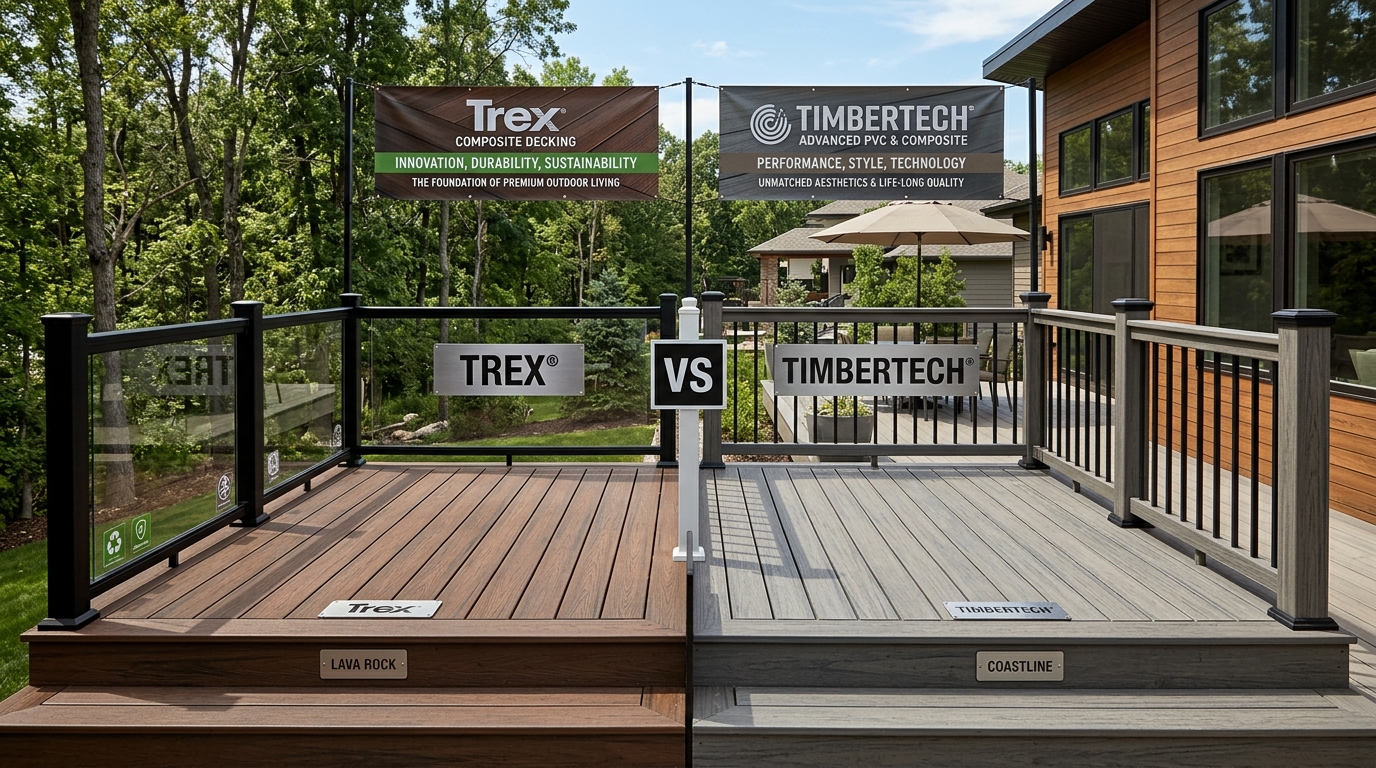
Choosing between Trex vs TimberTech is one of the most common decisions homeowners face when planning a new composite deck. Both brands have built strong reputations for producing durable, attractive, and low-maintenance decking materials that outperform traditional wood in many situations. While they share several similarities, important differences exist in design, durability, pricing, maintenance, and overall performance. Understanding these distinctions helps homeowners make a confident investment that matches their budget, climate, and lifestyle. This guide compares Trex vs TimberTech in detail to help you determine which composite decking option best suits your outdoor living space.
Understanding Composite Decking
Before comparing Trex vs TimberTech, it is helpful to understand what composite decking is and why it has become increasingly popular. Composite decking combines recycled wood fibers with synthetic materials to create boards that resist many common problems associated with natural wood. Unlike traditional lumber, composite boards require less maintenance and are designed to withstand moisture, fading, insects, and everyday wear. Homeowners often choose composite decking because it offers long-term durability while reducing the need for regular sanding, staining, or sealing. These benefits make it an attractive investment for outdoor living spaces.
Material Quality and Construction
When evaluating Trex vs TimberTech, material quality plays a significant role in overall performance. Both manufacturers use advanced engineering techniques to produce durable decking boards with protective outer layers that help resist stains, fading, and moisture. However, each brand uses its own manufacturing process and material composition, resulting in slight differences in texture, appearance, and performance characteristics. High-quality protective caps improve weather resistance and reduce maintenance requirements over time. Choosing between the two often depends on individual preferences regarding board feel, finish quality, and the specific environmental conditions where the deck will be installed.
Appearance and Design Options
One of the most noticeable differences in the Trex vs TimberTech comparison involves aesthetics. Both brands offer a wide selection of colors, grain patterns, and finishes that closely resemble natural hardwood. Some collections emphasize rich wood textures with realistic grain variation, while others feature cleaner, contemporary appearances suitable for modern outdoor spaces. Homeowners can select colors that complement their home’s architecture, landscaping, and personal style. Because visual preferences differ from one project to another, reviewing available samples before making a final decision helps ensure the chosen decking creates the desired outdoor atmosphere.
Durability and Weather Resistance
Durability remains one of the strongest selling points in the Trex vs TimberTech discussion. Both brands manufacture decking designed to withstand harsh outdoor conditions, including heavy rainfall, strong sunlight, and changing seasonal temperatures. Protective outer shells help reduce fading, staining, moisture absorption, and mold growth while maintaining structural integrity over many years. Although performance may vary slightly among product collections, both manufacturers prioritize long-term reliability. Homeowners living in regions with challenging climates often appreciate composite decking because it maintains its appearance better than traditional wood while requiring significantly less ongoing maintenance.
Maintenance Requirements
A major advantage when comparing Trex vs TimberTech is the relatively low maintenance required by both products. Unlike natural wood decks that demand frequent staining, painting, and sealing, composite decking generally requires only periodic cleaning with mild soap and water to maintain its appearance. Routine removal of leaves, dirt, and standing water also helps preserve long-term performance. This simplified maintenance schedule saves homeowners considerable time and effort throughout the life of the deck. For busy households, reduced maintenance often becomes one of the most important reasons for choosing composite materials over traditional lumber.
Pricing and Long-Term Value
Cost is another important consideration in the Trex vs TimberTech comparison. Initial pricing varies depending on product collection, color selection, and local availability, with premium lines generally costing more than entry-level options. Although composite decking typically requires a higher upfront investment than pressure-treated wood, its reduced maintenance expenses and longer lifespan often provide better long-term value. Homeowners should evaluate the complete cost of ownership rather than focusing solely on purchase price. Considering maintenance savings, durability, and replacement costs helps create a more accurate comparison between available decking solutions.
Installation Considerations
Proper installation significantly influences the performance of both Trex and TimberTech decking systems. Manufacturers provide installation guidelines covering spacing, fasteners, structural support, and ventilation to maximize product longevity. Professional installation often ensures the deck performs as intended while maintaining warranty eligibility. Homeowners with advanced construction experience may choose to install composite decking themselves, but careful attention to manufacturer instructions remains essential. Correct installation helps prevent issues such as uneven surfaces, improper drainage, or unnecessary movement, allowing the deck to maintain both its appearance and structural performance for many years.
Which Brand Is the Better Choice?
The answer to the Trex vs TimberTech question depends largely on personal priorities and project requirements. Some homeowners prioritize color selection and visual style, while others focus primarily on durability, maintenance, warranty coverage, or overall budget. Since both brands offer high-quality composite decking with strong reputations, there is no universal winner for every situation. Comparing product collections, requesting material samples, and evaluating local climate conditions can help narrow the decision. Choosing the decking that best aligns with individual preferences will ultimately deliver the greatest long-term satisfaction and outdoor enjoyment.
Conclusion
The Trex vs TimberTech comparison highlights two leading composite decking brands that offer durable, attractive, and low-maintenance alternatives to traditional wood. Both manufacturers provide excellent weather resistance, appealing designs, and long-lasting performance that can enhance outdoor living spaces for many years. While differences exist in appearance, pricing, construction, and product collections, each brand delivers dependable quality when installed correctly. Homeowners should carefully consider their budget, design preferences, maintenance expectations, and environmental conditions before making a final decision. With thoughtful planning, either option can become a valuable investment that improves both comfort and property value.