

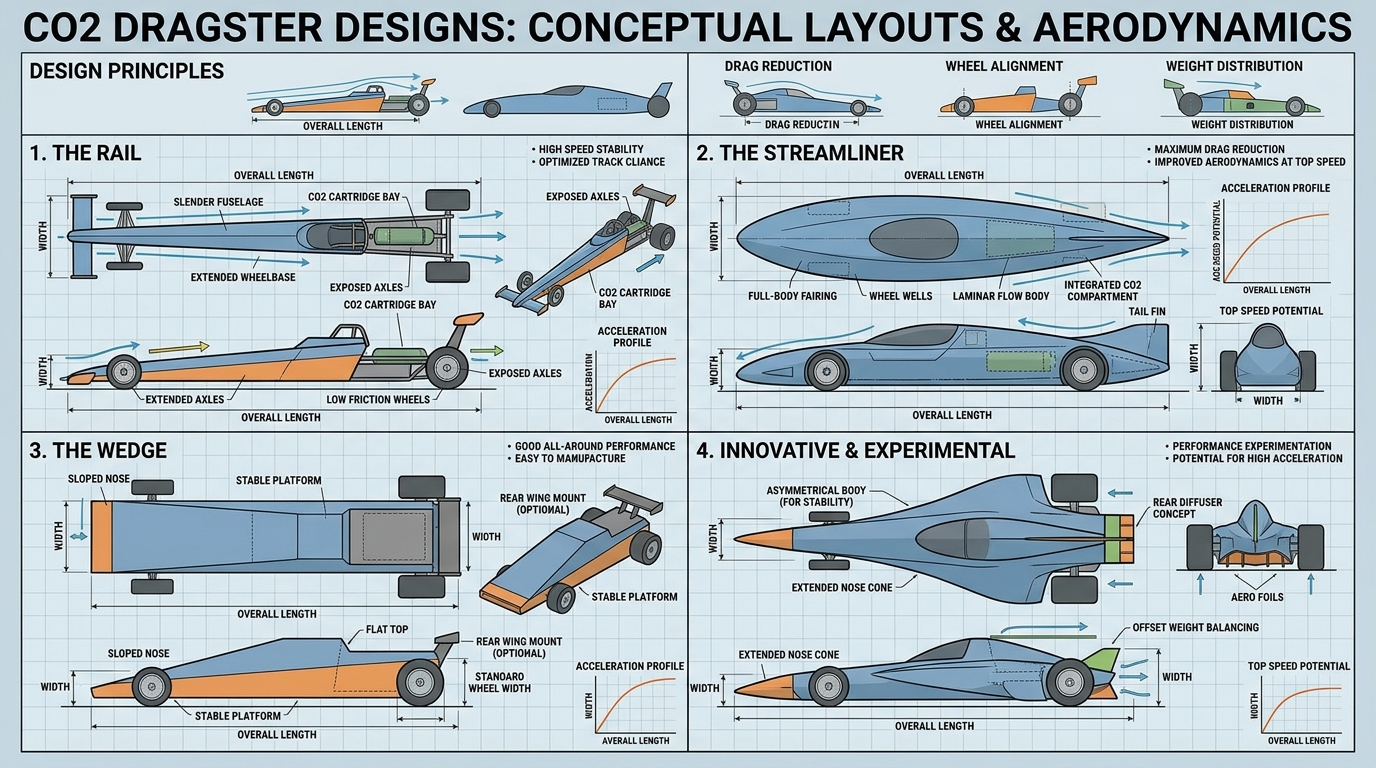
Dragster CO2 designs combine creativity, engineering, and scientific principles to create lightweight model cars powered by compressed carbon dioxide cartridges. These miniature racers are widely used in educational competitions because they help students understand aerodynamics, physics, and precision manufacturing in a practical way. A successful design balances speed, stability, and structural strength while minimizing unnecessary weight and air resistance. Whether you are participating in a classroom project or preparing for a competitive event, understanding the essential elements of dragster CO2 designs can significantly improve both performance and overall design quality.
Understanding the Basics of Dragster CO2 Designs
Dragster CO2 designs are based on model vehicles powered by a small carbon dioxide cartridge that releases compressed gas to propel the car along a straight track. Unlike electric or battery-powered models, these racers rely entirely on the rapid expansion of gas to generate forward motion. Because the available power is fixed, the design itself becomes one of the most important factors affecting speed. Engineers and students focus on reducing drag, lowering weight, and maintaining balance to maximize efficiency. Every design decision influences how effectively the vehicle converts stored energy into forward movement.
The Importance of Aerodynamics
Aerodynamics plays a major role in successful dragster CO2 designs because air resistance becomes a significant force during high-speed acceleration. A streamlined body allows air to flow smoothly around the vehicle, reducing turbulence and minimizing drag. Rounded front sections, gently tapered rear profiles, and smooth body surfaces all contribute to better aerodynamic performance. Designers carefully shape every part of the model to eliminate unnecessary resistance while maintaining structural integrity. Even small improvements in airflow can produce noticeable gains in speed, making aerodynamic refinement one of the most valuable aspects of competitive dragster design.
Choosing the Right Materials
Material selection directly influences the performance and durability of dragster CO2 designs. Lightweight wood, commonly used in educational competitions, provides an excellent balance between strength and ease of shaping. Designers remove unnecessary material while preserving enough structural support to withstand the powerful launch generated by the carbon dioxide cartridge. Excess weight slows acceleration, while excessive material removal may weaken the vehicle. Careful craftsmanship allows builders to achieve an efficient balance between low mass and adequate strength. Selecting quality materials also helps produce smoother finishes that improve both appearance and aerodynamic efficiency.
Weight Distribution and Balance
Proper weight distribution is essential for maintaining stability throughout the race. Successful dragster CO2 designs position weight carefully so the vehicle remains balanced during rapid acceleration and high-speed travel. Uneven weight distribution may cause the car to wobble, increase friction, or lose valuable speed before reaching the finish line. Designers often pay close attention to the relationship between the front and rear sections while maintaining alignment with the wheel system. A balanced vehicle travels straighter, reduces unnecessary movement, and converts more of its available energy into efficient forward motion instead of wasted mechanical resistance.
Wheel Alignment and Rolling Efficiency
Although the carbon dioxide cartridge supplies the power, the wheel system largely determines how efficiently that power reaches the track. Accurate wheel alignment minimizes rolling resistance and helps maintain a straight racing path. Poorly aligned wheels increase friction, create unwanted steering effects, and reduce overall speed. High-quality axles, properly fitted wheels, and careful assembly all contribute to smoother movement throughout the race. Builders often spend considerable time checking alignment because even slight imperfections can affect performance. Well-constructed dragster CO2 designs combine excellent rolling efficiency with precise engineering to maximize competitive results.
Designing for Speed Without Sacrificing Strength
Creating fast dragster CO2 designs requires removing excess material while maintaining sufficient structural integrity. Extremely thin body sections may reduce weight but can become vulnerable to cracking or damage during construction and competition. Designers must carefully evaluate which areas can safely be reduced and which require additional support. This balance reflects an important engineering principle where performance improvements must never compromise reliability. By combining thoughtful design with careful craftsmanship, builders produce lightweight vehicles capable of withstanding the powerful forces generated during launch while maintaining excellent racing performance throughout the event.
The Role of Precision in Construction
Precision construction separates average dragster CO2 designs from truly competitive racers. Every measurement, cut, and sanding step influences the vehicle’s final performance. Smooth surfaces reduce aerodynamic drag, accurate drilling improves axle alignment, and symmetrical body shapes maintain balance during acceleration. Careful attention to detail ensures each component functions exactly as intended without introducing unnecessary friction or instability. Builders who work patiently often produce faster and more reliable racers because consistent precision improves every aspect of vehicle performance. High-quality craftsmanship remains one of the defining characteristics of successful competition-ready dragster models.
Learning Engineering Through CO2 Dragster Projects
One of the greatest strengths of dragster CO2 designs is their educational value. Students gain practical experience applying concepts from physics, engineering, mathematics, and design while solving real performance challenges. Building and testing a model encourages experimentation, critical thinking, and continuous improvement through observation and refinement. Participants also develop valuable skills such as measurement, problem-solving, planning, and precision manufacturing. These projects transform theoretical classroom lessons into engaging hands-on experiences, helping learners understand how engineering principles influence real-world performance while inspiring future interest in science and technology careers.
Conclusion
Dragster CO2 designs represent an excellent combination of creativity, engineering, and scientific learning. By focusing on aerodynamics, lightweight construction, balanced weight distribution, precise wheel alignment, and careful craftsmanship, builders can significantly improve the speed and efficiency of their model racers. Beyond competition, these projects provide valuable educational opportunities that strengthen practical problem-solving and engineering skills. Whether designed for classroom learning or competitive racing, successful dragster CO2 designs demonstrate how thoughtful planning, attention to detail, and continuous refinement can transform simple materials into impressive examples of engineering performance and innovation.