

Understanding the Meaning of In in Spanish
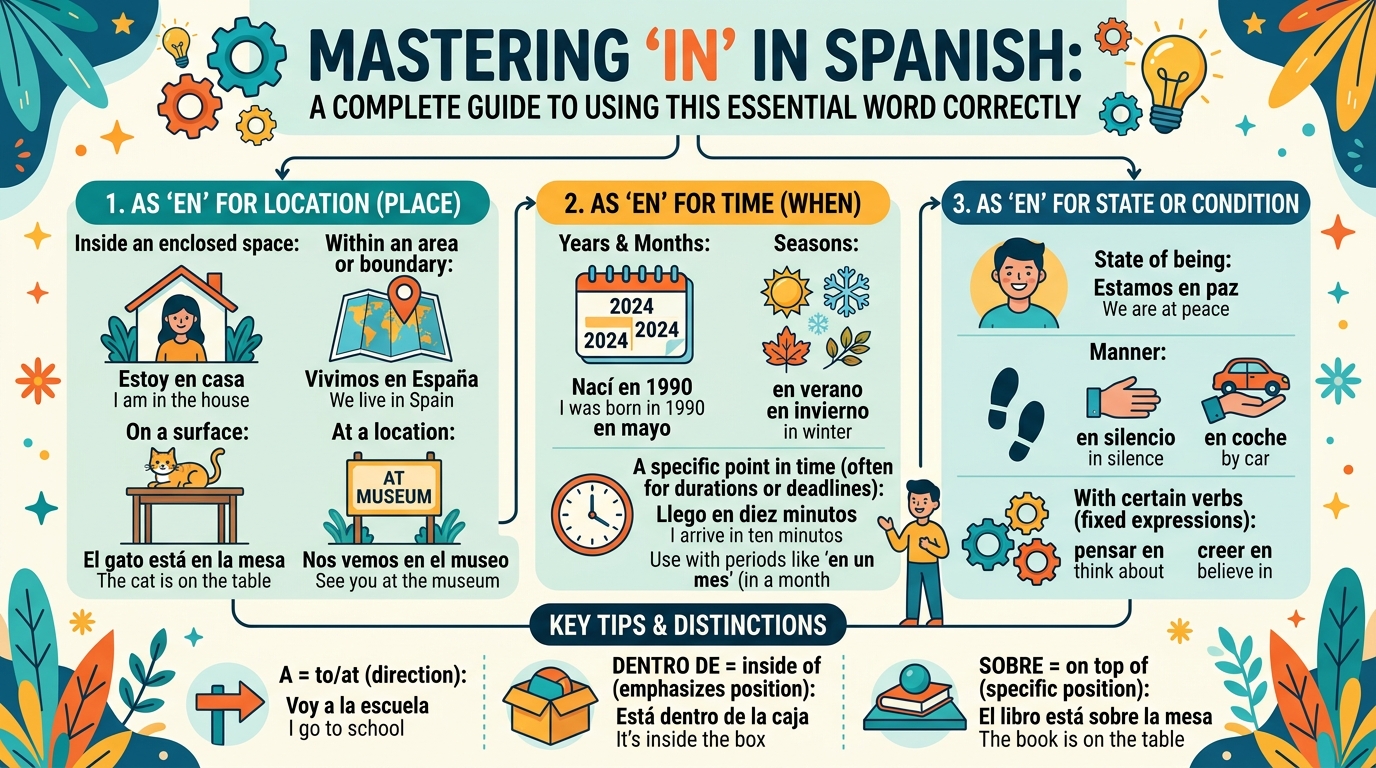
The phrase in in Spanish is commonly translated as “en,” which is one of the most frequently used prepositions in the language. It generally indicates a location, position, or situation within something. For example, if someone wants to say they are in a house, city, or room, “en” is usually the correct choice. Understanding this basic translation helps learners create simple sentences and describe places accurately. Although “en” is often the direct equivalent of “in,” context remains important because Spanish sometimes uses other words where English speakers would naturally choose “in” during everyday communication.
Why Context Matters When Translating In
One of the most important aspects of learning in in Spanish is recognizing that translation depends heavily on context. Languages do not always match word for word, and Spanish is no exception. While “en” works in many situations, there are cases where other prepositions or sentence structures are more appropriate. For instance, expressions involving time, transportation, or movement may require different wording. Understanding context allows learners to avoid direct translation mistakes and communicate more naturally. Developing this awareness improves fluency and helps speakers understand how native Spanish users structure their thoughts and conversations effectively.
Using En for Locations and Places
The most common use of in in Spanish appears when discussing physical locations. The preposition “en” is used to indicate that someone or something is inside a place or situated within a particular area. Whether talking about being in a classroom, in a city, or in an office, “en” helps establish location clearly. This usage is essential for everyday communication because people frequently describe where they live, work, study, or travel. Mastering location-based expressions provides a strong foundation for language learning and helps learners create practical sentences that are useful in real-life interactions and conversations.
Expressing Time with In in Spanish
English speakers often use the word “in” when discussing future time periods, but Spanish handles these situations differently. When exploring in in Spanish, learners discover that time expressions may not always require a direct translation of “in.” Depending on the sentence, Spanish may use a different structure to indicate that something will happen after a specific amount of time. Understanding these patterns is important because literal translation can lead to awkward or incorrect sentences. Learning how Spanish expresses future events naturally improves comprehension and enables learners to speak more accurately in both casual and formal situations.
Common Everyday Expressions Using In
Many daily phrases contain the concept of in in Spanish, making this topic especially useful for language learners. Expressions related to location, participation, condition, or involvement frequently rely on prepositions that convey the meaning of “in.” These phrases appear in conversations about work, school, travel, relationships, and personal experiences. By studying common expressions, learners become familiar with how native speakers naturally use Spanish in real contexts. Exposure to these patterns improves vocabulary retention and strengthens communication skills. Over time, learners begin recognizing these expressions automatically, making conversations smoother and more confident.
Differences Between English and Spanish Usage
A major challenge when learning in in Spanish is understanding that English and Spanish do not always use prepositions in the same way. English often relies on “in” in situations where Spanish chooses another word or structure entirely. This difference can be confusing for beginners who expect direct translations. However, recognizing these distinctions is an important step toward language proficiency. Instead of translating every word individually, successful learners focus on understanding complete phrases and sentence patterns. This approach helps develop a more natural speaking style and reduces common errors that result from translating directly from English.
Common Mistakes Learners Should Avoid
Many students encounter difficulties when learning in in Spanish because they apply English grammar rules to Spanish sentences. One frequent mistake is using “en” in every situation where English uses “in.” Although this strategy may sometimes work, it often creates incorrect or unnatural expressions. Another challenge involves misunderstanding phrases related to time and movement. Avoiding these errors requires practice, exposure, and attention to authentic language usage. Reading, listening, and speaking regularly help learners recognize correct patterns. Over time, these experiences strengthen grammatical understanding and make proper preposition use feel more intuitive and automatic.
How Practice Improves Preposition Skills
Mastering in in Spanish requires consistent practice rather than simple memorization. Prepositions often become easier to understand through repeated exposure to real examples in conversations, books, videos, and everyday communication. When learners encounter the same structures regularly, they begin recognizing patterns and applying them naturally. Practice also helps build confidence because repeated use reinforces correct habits. Writing sentences, speaking with native speakers, and reviewing common expressions all contribute to long-term improvement. Language acquisition is a gradual process, and prepositions become significantly easier when learners actively engage with Spanish in meaningful and practical ways.
Building Confidence Through Real-Life Usage
The best way to become comfortable with in in Spanish is by using it in real-life situations. Applying language knowledge during conversations allows learners to connect grammar concepts with practical communication. Whether discussing travel plans, describing locations, or talking about daily routines, frequent use strengthens understanding and fluency. Mistakes are a normal part of learning and often provide valuable opportunities for improvement. As learners gain experience, they become more confident in selecting the correct expressions and sentence structures. This confidence encourages continued practice and helps transform theoretical knowledge into effective communication skills.
Conclusion
Understanding in in Spanish is an essential step for anyone learning the language. Although “en” is the most common translation, context plays a crucial role in determining the correct usage. By exploring location expressions, time-related structures, common phrases, and differences between English and Spanish, learners can develop a deeper understanding of how the language works. Consistent practice and real-world application further strengthen these skills. As confidence grows, using Spanish becomes more natural and effective, allowing learners to communicate clearly and accurately in a wide range of everyday situations.