

Cooking and baking often require precise measurements, and understanding common kitchen conversions can save both time and effort. One of the most frequently asked questions is how many tablespoons in 1/3 cup. Whether you are following a recipe, scaling ingredients, or working without a measuring cup, knowing this conversion can help you achieve better results. Accurate measurements contribute to consistency, flavor, and texture in both sweet and savory dishes. This guide explains the conversion in detail while exploring why it matters in everyday cooking. By understanding these simple measurement relationships, you can cook with greater confidence and accuracy.
Understanding How Many Tablespoons in 1/3 Cup
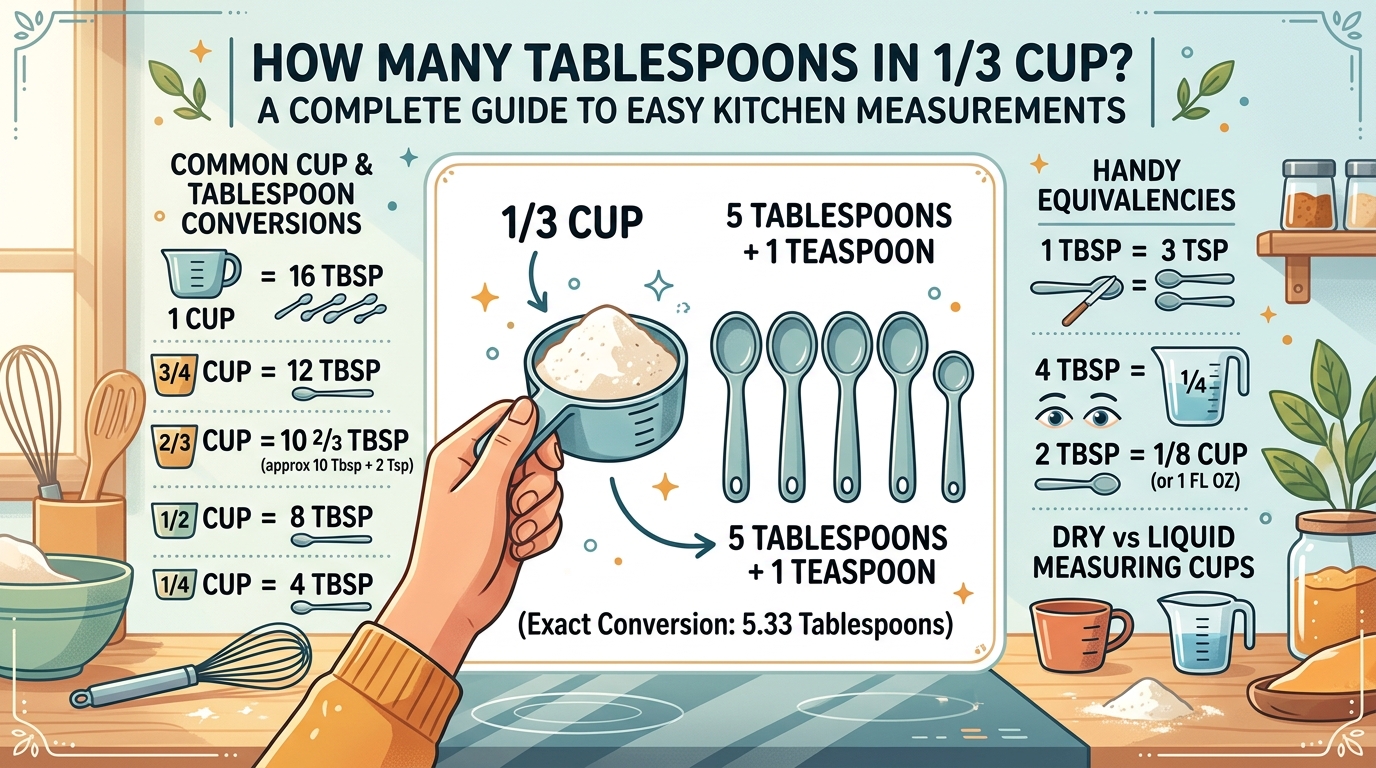
The answer to how many tablespoons in 1/3 cup is straightforward. One-third of a cup equals 5 tablespoons plus 1 teaspoon. Since one standard cup contains 16 tablespoons, dividing that amount by three gives approximately 5.33 tablespoons. In practical cooking, this measurement is commonly expressed as 5 tablespoons and 1 teaspoon. Knowing this conversion is especially helpful when a recipe calls for 1/3 cup but only measuring spoons are available. Instead of guessing, you can accurately measure ingredients and maintain the intended balance of the recipe. This simple conversion is one of the most useful kitchen measurements to remember.
Why Accurate Measurements Matter in Cooking
Accurate ingredient measurements play a significant role in achieving consistent cooking and baking results. Understanding how many tablespoons in 1/3 cup helps prevent mistakes that could affect flavor, texture, and overall quality. In baking, even small measurement errors can change the structure of cakes, cookies, or bread. In cooking, incorrect amounts of spices, oils, or liquids may alter the final taste. Precise measurements ensure that recipes work as intended and produce reliable outcomes every time. Learning common kitchen conversions allows home cooks to follow instructions confidently while reducing the risk of errors that may compromise a dish.
Converting Cups to Tablespoons with Confidence
Kitchen conversions become easier once you understand the relationship between cups and tablespoons. When determining how many tablespoons in 1/3 cup, it helps to know that one cup equals 16 tablespoons. This basic conversion serves as a foundation for calculating smaller portions. Many recipes use fractions of a cup, making measurement knowledge especially valuable. By remembering key conversions, cooks can adapt recipes without relying on charts or digital tools. Understanding these relationships also helps when adjusting serving sizes or substituting ingredients. A strong grasp of measurement conversions improves efficiency and confidence in the kitchen while supporting more accurate recipe preparation.
Common Situations Where This Conversion Helps
There are many situations where knowing how many tablespoons in 1/3 cup becomes useful. Sometimes measuring cups are unavailable, damaged, or misplaced, leaving only measuring spoons on hand. In other cases, recipes may need to be doubled, halved, or adjusted to suit dietary preferences or serving requirements. Accurate conversions allow these modifications without affecting recipe balance. This knowledge is particularly valuable for home bakers who often work with precise ingredient ratios. Whether preparing sauces, dressings, desserts, or baked goods, understanding equivalent measurements helps maintain consistency and ensures that each dish turns out as expected.
The Importance of Measurement Consistency
Consistency is one of the keys to successful cooking and baking. Knowing how many tablespoons in 1/3 cup helps create uniform results whenever a recipe is prepared. Consistent measurements ensure that flavors remain balanced and textures develop correctly. Professional chefs and experienced bakers rely heavily on precise ingredient quantities because even minor variations can influence outcomes. Home cooks benefit from the same approach. When measurements are accurate, recipes become more predictable and easier to repeat. Developing strong measurement habits not only improves cooking skills but also increases confidence when experimenting with new ingredients and techniques in the kitchen.
How Measurement Knowledge Saves Time
Understanding common conversions such as how many tablespoons in 1/3 cup can save valuable time during meal preparation. Instead of searching for conversion charts or online calculators, cooks can quickly measure ingredients and continue with the recipe. This efficiency becomes especially important when preparing multiple dishes or working under time constraints. Familiarity with kitchen measurements streamlines the cooking process and reduces interruptions. It also minimizes the chance of errors caused by rushed calculations. Over time, remembering key conversions becomes second nature, making recipe preparation smoother and more enjoyable while improving overall kitchen productivity and confidence.
Using Tablespoons for Liquid and Dry Ingredients
The conversion for how many tablespoons in 1/3 cup applies to both liquid and dry ingredients, making it a versatile measurement tool. Whether measuring milk, oil, sugar, flour, or spices, the equivalent remains the same. However, proper measuring techniques still matter. Dry ingredients should be leveled for accuracy, while liquids should be measured carefully to avoid overfilling. Understanding this distinction helps maintain precision when using tablespoons as a substitute for measuring cups. Knowing how to measure different ingredient types correctly ensures that recipes maintain their intended consistency and produce reliable results regardless of the ingredients involved.
Building Confidence Through Kitchen Basics
Many cooking skills are built on a foundation of basic knowledge, and measurement conversions are among the most important. Learning how many tablespoons in 1/3 cup gives cooks a practical tool they can use regularly. Mastering simple conversions creates confidence and encourages greater flexibility in the kitchen. Instead of feeling restricted by available equipment, cooks can adapt to different situations with ease. This knowledge also supports recipe customization and creative experimentation. As measurement skills improve, preparing meals becomes more intuitive and enjoyable. Small pieces of kitchen knowledge often have a surprisingly large impact on cooking success.
Making Everyday Cooking More Convenient
Convenience is an important aspect of modern cooking, and understanding common measurement equivalents contributes significantly to a smoother experience. Knowing how many tablespoons in 1/3 cup allows cooks to work efficiently without pausing to verify conversions repeatedly. This practical knowledge simplifies recipe preparation, especially when making quick meals or handling multiple ingredients at once. It also helps reduce kitchen frustration by eliminating uncertainty during the measuring process. Whether you cook occasionally or every day, having a strong understanding of basic conversions can improve workflow, reduce mistakes, and make meal preparation more organized and enjoyable.
Conclusion
Understanding how many tablespoons in 1/3 cup is a valuable kitchen skill that supports accurate cooking and baking. The equivalent measurement of 5 tablespoons and 1 teaspoon provides a reliable solution when measuring cups are unavailable or when recipes require adjustments. Accurate measurements contribute to consistency, better flavor, and successful outcomes across a wide range of dishes. By learning common kitchen conversions and applying them confidently, cooks can save time, reduce errors, and improve overall efficiency. This simple yet essential knowledge makes everyday cooking easier and helps create dependable results with every recipe.